




Shenzhen is relocating its 43-year-old Nantou Heliport to Longhua District and expanding it into a much larger general aviation hub designed for helicopters, eVTOL aircraft and other low-altitude aviation services.
The relocated facility has now been formally named Shenzhen Longhua Airport. Planned for the Zhangkengjing area of Longhua, it will replace the Nantou Heliport, which opened in 1983 and has long supported offshore oil operations in the South China Sea.
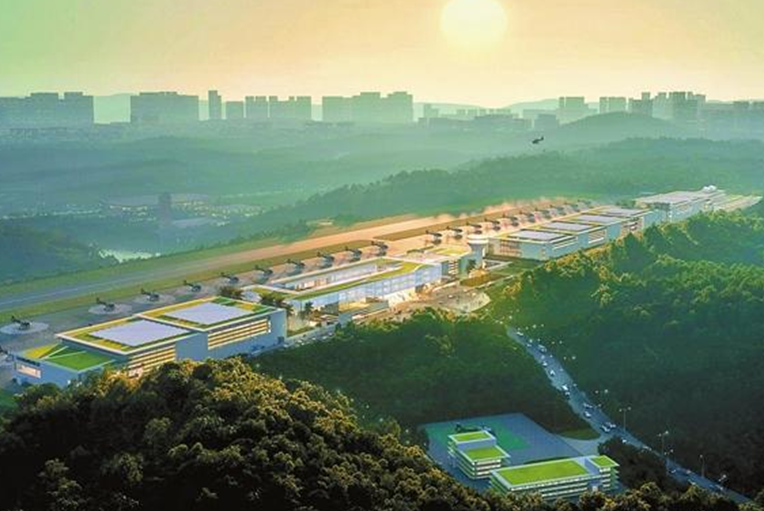
A rendering shows the planned Shenzhen Longhua Airport, which is expected to be completed at the end of 2027.
The move is more than a change of location. While the Nantou facility mainly handled helicopter operations, the new airport is planned to support flight training, emergency rescue, aircraft test flights and validation testing of electric vertical takeoff and landing aircraft, or eVTOLs — the technology behind many proposed “air taxi” services.
It is also expected to handle aerial sightseeing, aviation training and cross-border logistics, turning the replacement project into a broader piece of infrastructure for Shenzhen’s low-altitude aviation industry.
Bigger and more versatile
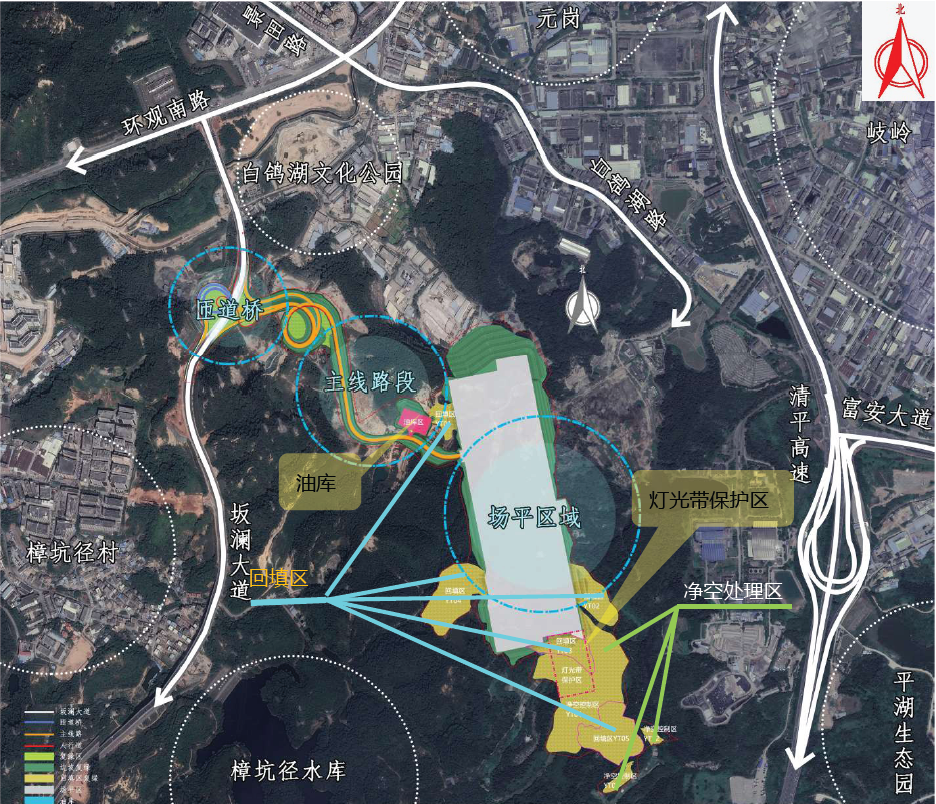
A site plan shows the location and layout of Shenzhen Longhua Airport in the Zhangkengjing area of Longhua District.
Shenzhen Longhua Airport will occupy about 258,300 square meters and have roughly 90,000 square meters of floor space, according to the latest project information. Its overall construction scale will be more than twice that of the existing Nantou facility, with investment estimated at about 1 billion yuan.
Plans include an 800-meter runway, 26 aircraft parking stands, hangars, maintenance facilities, an aviation materials warehouse and an integrated operations building.
The airport is expected to be completed by the end of 2027, according to the latest project schedule.
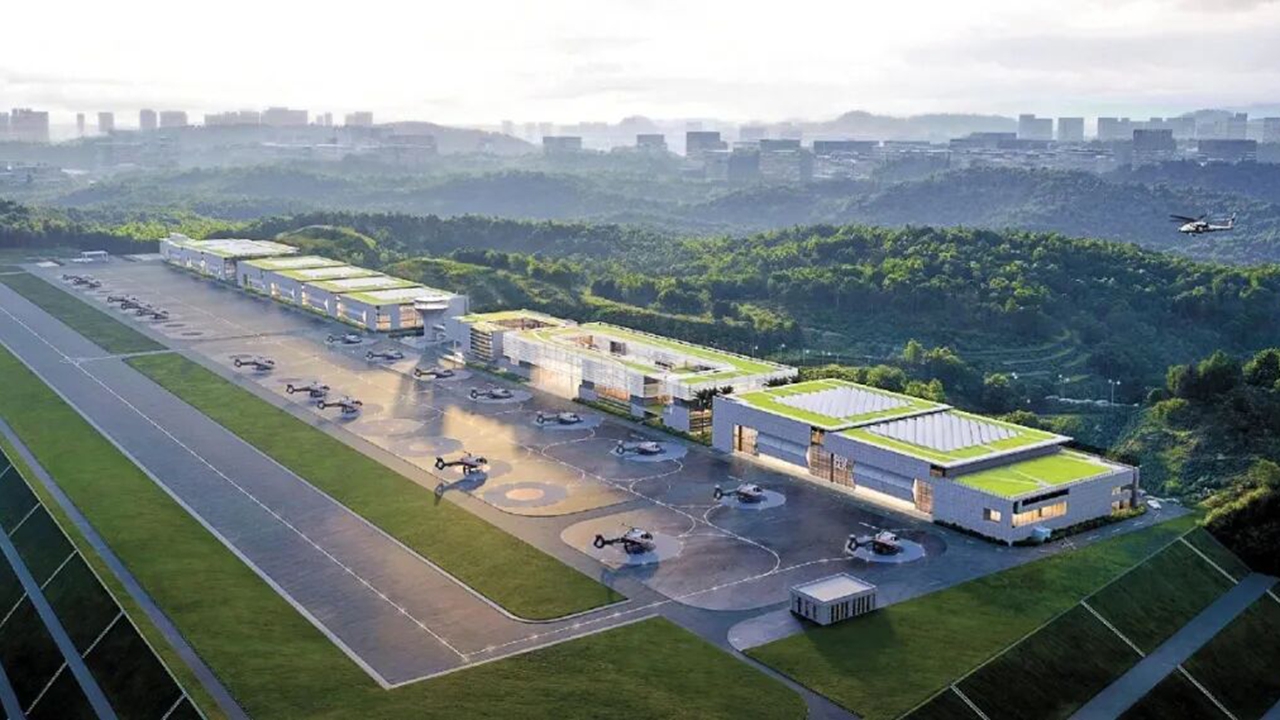
A rendering shows the runway, aircraft parking stands and hangars planned for Shenzhen Longhua Airport.
Its design is intended to blend into the surrounding hills, with extensive green roofs, landscaped terraces, glass and exposed-concrete facades and elevated walkways.
Public areas and aviation operations will be separated, while viewing corridors are planned to allow visitors to watch aircraft operations without entering restricted zones.
Why Nantou is moving
The relocation reflects how dramatically Shenzhen has changed since Nantou Heliport opened in 1983.
The heliport was originally built largely to support offshore oil exploration and later transported workers and supplies to drilling platforms in the South China Sea. It began operating eight years before Shenzhen Bao’an International Airport opened.
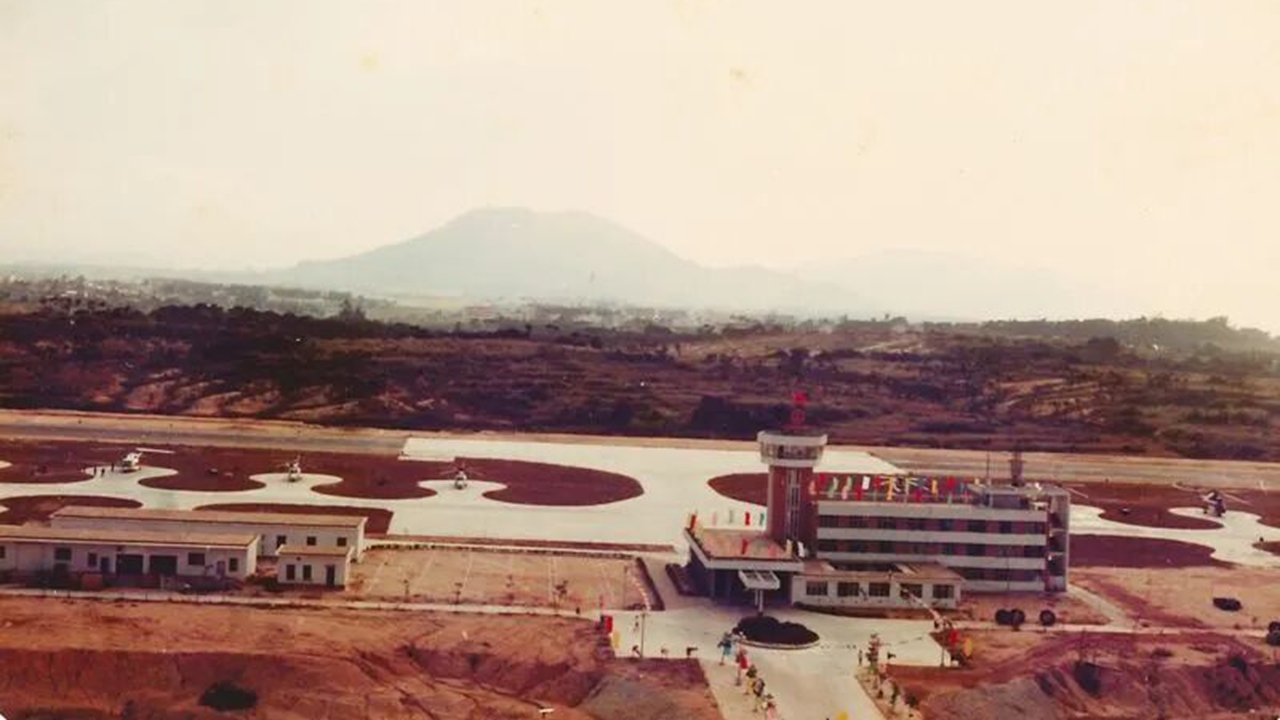
An archival photo shows Nantou Heliport in its early years after opening in 1983.
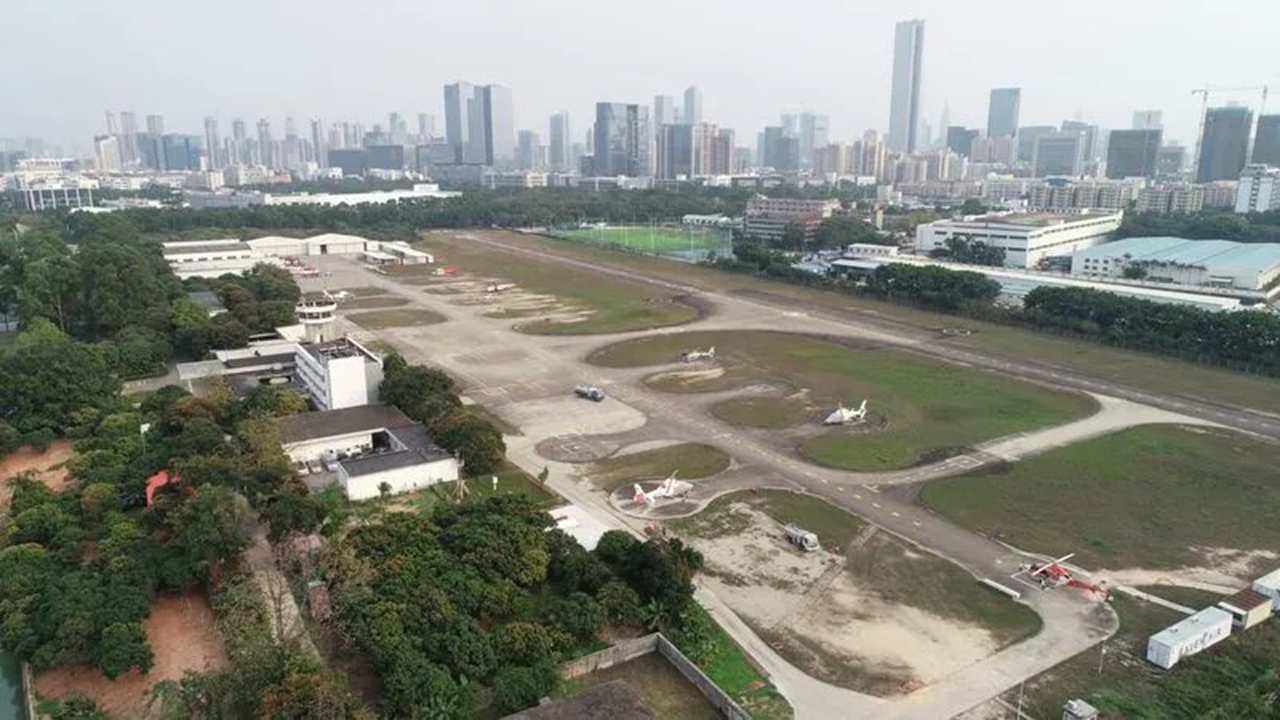
Nantou Heliport is seen in Shenzhen’s Nanshan District. The facility, which opened in 1983, is to be relocated to Longhua District.
Over the following decades, however, dense urban development grew around the site. The surrounding area has become one of Shenzhen’s major technology and business clusters, creating increasing tension between aviation safety requirements and urban development.
Shenzhen decided in 2012 to relocate the heliport.
The Longhua site gives the city room not only to replace the old facility, but also to broaden its role from conventional helicopter operations to testing and services for emerging aircraft.
That shift is central to Shenzhen’s wider push into the low-altitude economy, which includes passenger transport, logistics, emergency services, drones and other aviation activities operating at relatively low altitudes.
For Shenzhen, the project therefore represents both a relocation and a reinvention: a heliport built for offshore oil operations in the 1980s is being replaced by an airport intended to serve a new generation of aircraft.
Photos: Bao'an Daily